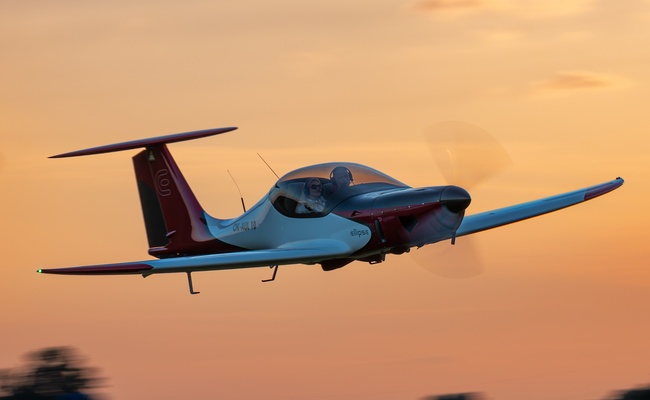
The Four Personalities of the Ellipse Spirit 916
16. June 2026
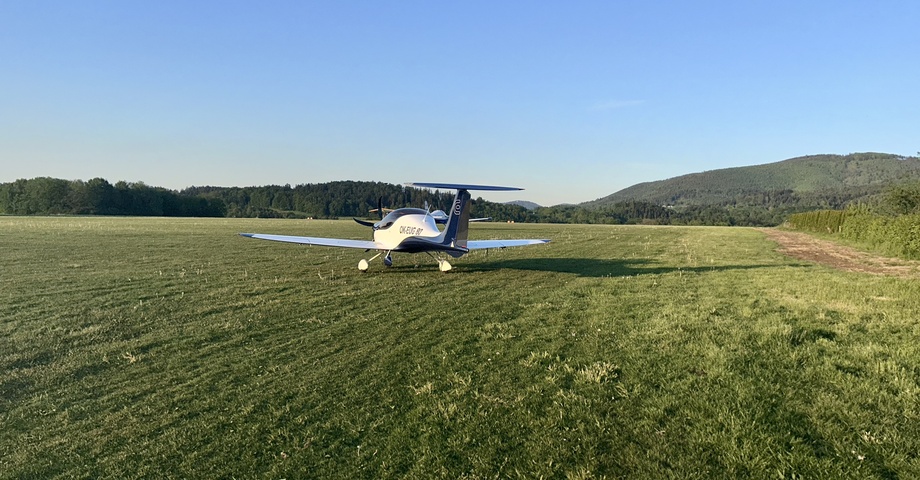
The Four Personalities of the Ellipse Spirit 916
Why one aircraft can feel like four completely different machines.
There is a moment during almost every cross-country flight when a pilot asks the same question:
“Do I want to save fuel, or do I want to get there faster?”
For decades, aviation has forced us to choose.
A slower cruise setting delivers impressive range, while higher speeds inevitably come at a significant fuel penalty. The relationship seems fixed and unavoidable.
After more than 200 flight hours with the ROTAX 916 iS and extensive performance testing across multiple altitudes, we discovered something unexpected.
The Ellipse Spirit 916 does not have a single optimal cruise setting.
It has four.
Four distinct flight profiles. Four personalities. Four ways of approaching exactly the same journey.
And each one makes sense.
The Explorer
Maximum range, minimum fuel burn
Imagine a clear morning somewhere above the Alps.
The weather is perfect. Visibility stretches to the horizon. There is no meeting waiting at the destination and no reason to rush.
This is where the Explorer comes alive.
At first glance, many pilots might expect a turbocharged 160 hp engine to encourage speed. Yet one of the most surprising discoveries from our flight testing was how comfortable the aircraft feels at moderate power settings.
At approximately 17 litres per hour, the Ellipse Spirit still cruises at more than 210 km/h TAS.
That number deserves a second look.
Many aircraft consume similar fuel while travelling considerably slower.
What makes this profile particularly attractive is that every litre saved extends the day’s adventure. The aircraft simply keeps covering ground while fuel consumption remains remarkably modest.
Mission Profile – Explorer
| True Airspeed TAS | 212 km/h |
| Fuel Flow | 17.1 l/h |
| Altitude | 8,000 ft |
| OAT | 11 °C |
| QNH | 1009 hPa |
| RPM | 4,500 |
| MAP | 30 inHg |
What this means in practice
- Approximate efficiency: 12.4 km/l
- Approximate fuel consumption: 8.1 l/100 km
- Practical still-air range: ~1,330 km including 45-minute reserve
This is the configuration for pilots who believe the journey itself is the destination.
The Traveller
The sweet spot begins to appear
Every aircraft has a point where everything suddenly feels balanced.
Not too slow. Not too fast. Not too expensive.
For the Ellipse Spirit 916, this point appears around 225–230 km/h TAS.
The aircraft begins to reveal one of the biggest advantages of modern turbocharged engines: speed increases noticeably, while fuel consumption grows far more slowly than many pilots expect.
This is the setting where weekend trips become practical.
Mountains feel closer. Coastlines become reachable. Countries become afternoon destinations.
Mission Profile – Traveller
| True Airspeed TAS | 227 km/h |
| Fuel Flow | 21.4 l/h |
| Altitude | 8,000 ft |
| OAT | 11 °C |
| QNH | 1009 hPa |
| RPM | 4,800 |
| MAP | 34 inHg |
What this means in practice
- Approximate efficiency: 10.6 km/l
- Approximate fuel consumption: 9.4 l/100 km
- Practical still-air range: ~1,100 km including 45-minute reserve
For many owners, this is likely where the throttle will spend most of its life.
The Business Traveller
Where speed starts winning
Every pilot eventually encounters days when time matters.
A weather system is moving in. The destination airport closes early. The return flight must happen before sunset.
This is where the Business Traveller emerges.
At around 235 km/h TAS, the aircraft enters a performance regime that would have seemed extraordinary in the ultralight category not very long ago.
The most interesting observation from our measurements is not the speed itself.
It is how little fuel is required to achieve it.
Between approximately 227 and 235 km/h TAS, fuel consumption increases only modestly, while travel times continue to decrease noticeably.
From a practical travelling perspective, this may be the most intelligent cruise setting of all.
Mission Profile – Business Traveller
| True Airspeed TAS | 235 km/h |
| Fuel Flow | 23.6 l/h |
| Altitude | 8,000 ft |
| OAT | 11 °C |
| QNH | 1009 hPa |
| RPM | 5,000 |
| MAP | 36 inHg |
What this means in practice
- Approximate efficiency: 10.0 km/l
- Approximate fuel consumption: 10.0 l/100 km
- Practical still-air range: ~1,020 km including 45-minute reserve
This is where many experienced touring pilots will find their personal sweet spot.
The Athlete
When efficiency becomes secondary
And then there are days when curiosity takes over.
You know the aircraft is capable of more. You know the weather is ideal. You simply want to experience the full capability of the machine.
The throttle moves forward. The turbocharger works harder. The propeller converts power into speed. The numbers continue climbing.
The aircraft feels transformed.
The remarkable thing is not merely achieving these speeds.
The remarkable thing is that they remain available in a practical touring aircraft carrying full travelling equipment and enough fuel for serious cross-country missions.
Mission Profile – Athlete
| True Airspeed TAS | 260 km/h |
| Fuel Flow | 31.3 l/h |
| Altitude | 8,000 ft |
| OAT | 11 °C |
| QNH | 1009 hPa |
| RPM | 5,500 |
| MAP | 40 inHg |
What this means in practice
- Approximate efficiency: 8.3 km/l
- Approximate fuel consumption: 12.0 l/100 km
- Practical still-air range: ~790 km including 45-minute reserve
No pilot flies every trip this way.
But everyone enjoys knowing they can.
Why We Use TAS Instead of IAS
All performance figures presented in this article are expressed as True Airspeed TAS.
Pilots fly using Indicated Airspeed IAS, which remains the primary reference for aircraft handling and safety. However, when discussing real travelling performance, IAS tells only part of the story.
As altitude increases, air density decreases. The IAS displayed on the instrument panel becomes lower, even though the aircraft may be travelling significantly faster through the air mass.
TAS represents the aircraft’s actual speed through the air and therefore provides the most meaningful measure of real-world cross-country performance.
IAS tells the pilot how the aircraft flies.
TAS tells the traveller how quickly the aircraft arrives.
What Does It Mean in the Real World?
Performance figures are useful.
Destinations are more meaningful.
Using measured cruise data from the Ellipse Spirit 916, we compared several popular routes frequently flown by Central European pilots.
The figures below assume still-air conditions and are intended to illustrate the differences between the four cruise profiles.
Ostrava LKMT – Split LDSP
Approximate distance: 710 km
| Profile | Flight Time | Fuel Used |
|---|---|---|
| Explorer | 3 h 21 min | 57 l |
| Traveller | 3 h 08 min | 67 l |
| Business Traveller | 3 h 01 min | 71 l |
| Athlete | 2 h 44 min | 85 l |
Ostrava LKMT – Bovec, Slovenia
Approximate distance: 520 km
| Profile | Flight Time | Fuel Used |
|---|---|---|
| Explorer | 2 h 27 min | 42 l |
| Traveller | 2 h 17 min | 49 l |
| Business Traveller | 2 h 13 min | 52 l |
| Athlete | 2 h 00 min | 63 l |
Ostrava LKMT – Bremgarten, Germany
Approximate distance: 690 km
| Profile | Flight Time | Fuel Used |
|---|---|---|
| Explorer | 3 h 15 min | 56 l |
| Traveller | 3 h 02 min | 65 l |
| Business Traveller | 2 h 56 min | 69 l |
| Athlete | 2 h 39 min | 83 l |
The numbers reveal something interesting.
The same aircraft can comfortably cross countries at remarkable efficiency or significantly reduce travel times simply by selecting a different cruise profile.
How Far Can You Fly on One Tank?
The Ellipse Spirit carries 120 litres of fuel.
The figures below assume a 45-minute fuel reserve at the selected cruise setting.
| Profile | Cruise TAS | Fuel Flow | Practical Range |
|---|---|---|---|
| Explorer | 212 km/h | 17.1 l/h | ~1,330 km |
| Traveller | 227 km/h | 21.4 l/h | ~1,100 km |
| Business Traveller | 235 km/h | 23.6 l/h | ~1,020 km |
| Athlete | 260 km/h | 31.3 l/h | ~790 km |
Practical range calculated using 120 litres total fuel capacity and a 45-minute reserve. Actual range depends on wind, loading, altitude and atmospheric conditions.
Perhaps the most remarkable figure is not the maximum speed.
It is the fact that even with a conservative 45-minute reserve, the Explorer profile still offers practical non-stop legs exceeding 1,300 kilometres.
That opens a surprising number of destinations across Europe without requiring a fuel stop.
Flight-Test Configuration
| Aircraft | Ellipse Spirit |
| Engine | ROTAX 916 iS |
| Propeller | HELIX 5-Blade |
| Landing Gear | Fixed Gear |
| Fuel Capacity | 120 litres |
| MTOM | 600 kg |
| Empty Weight | 369 kg |
| Test Altitudes | 4,000–8,000 ft |
| QNH | 1009 hPa |
| OAT Range | 11–15 °C |
All performance figures presented in this article are based on actual flight-test measurements collected during normal operations.
One Aircraft. Four Different Missions.
What surprised us most was not the maximum speed.
It was the versatility.
At one setting, the aircraft is capable of crossing more than a thousand kilometres while consuming remarkably little fuel.
At another, it cruises comfortably above 230 km/h TAS while maintaining excellent operating efficiency.
Push the throttle further, and it becomes one of the fastest touring aircraft in its category.
The Ellipse Spirit 916 is not defined by a single cruise number.
It is defined by choice.
And perhaps that is the greatest luxury modern aviation can offer.